Arthritis and Farming
ID
442-083 (BSE-317P)
Approximately 52.2 million, or more than 1 in 5 Americans, suffer from arthritis. This chronic disease is more prevalent among farmers. A survey of Virginia farmers revealed that about 30 percent of the respondents have been diagnosed with arthritis. Among those affected, about half of them reported that the condition interferes with their daily activities even though only 42 percent of them are currently receiving treatment (Mariger et al. 2009). Since it causes pain and inflammation in joints and limits mobility, arthritis has the potential to prematurely disable farmers and farm workers if they do not take proper care.
This publication was developed primarily to familiarize farmers, ranchers, and farm workers with arthritis by providing general information about the disease. It provides information on the types of arthritis, symptoms, treatments, and steps that can be taken to avoid permanent damage to joints so individuals can continue farming activities without pain. It also provides sources for additional arthritis-related information and types of assistance.
The information presented here should not be used as a substitute for the advice and guidance that can be obtained from a physician. On the other hand, this information can be useful in giving you the background to have an intelligent discussion with your doctor about arthritis and a treatment plan. Considering that early diagnosis is extremely important in treating arthritis and minimizing its severity, individuals experiencing joint pain should consult with their family physician without delay.
Arthritis
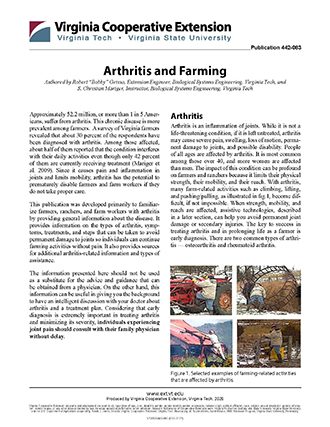
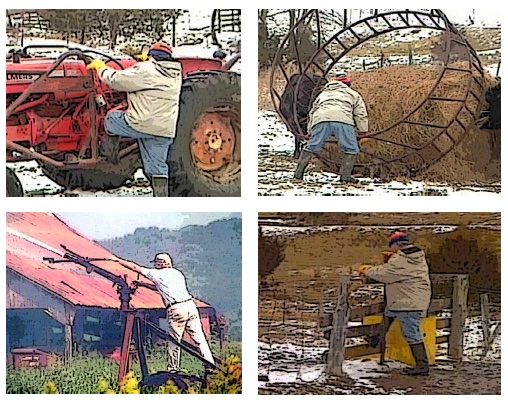
Arthritis is an inflammation of joints. While it is not a life-threatening condition, if it is left untreated, arthritis may cause severe pain, swelling, loss of motion, permanent damage to joints, and possible disability. People of all ages are affected by arthritis. It is most common among those over 40, and more women are affected than men. The impact of this condition can be profound on farmers and ranchers because it limits their physical strength, their mobility, and their reach. With arthritis, many farm-related activities such as climbing, lifting, and pushing/pulling, as illustrated in fig.1, become difficult, if not impossible. When strength, mobility, and reach are affected, assistive technologies, described in a later section, can help you avoid permanent joint damage or secondary injuries. The key to success in treating arthritis and in prolonging life as a farmer is early diagnosis. There are two common types of arthritis — osteoarthritis and rheumatoid arthritis.
Osteoarthritis
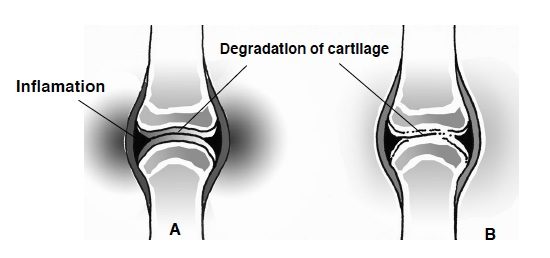
This type of arthritis develops slowly over time due to the degeneration of cartilage separating the bones within the joint. Figure 2 compares a good joint with an affected joint. As the cartilage wears out, the space between bones in the joint narrows and spurs may develop between the bones. Eventually as the bone surfaces rub together, the joints become inflamed, causing stiffness and pain.
Usually adults over 40 get osteoarthritis. Severe injury to joints, repetitive motion, and stressful use of joints are the primary causes of osteoarthritis. For these reasons, farmers and ranchers are more susceptible to this type of arthritis. Excess body weight, enzyme imbalance, and heredity are other possible causes for osteoarthritis. Excess weight, particularly, increases the risk of developing osteoarthritis in weight-bearing joints of hips, knees, and toes.
With the onset of osteoarthritis, one may experience pain and stiffness temporarily following strenuous activities or when getting up in the mornings. Generally, this type of discomfort may not last more than 30 minutes. Other symptoms associated with osteoarthritis may include the following:
- Pain and tenderness in joints.
- Discomfort in a joint due to change in weather.
- Swelling and stiffness in a joint.
- Bony lumps on the middle or ends of joints of fingers.
- Loss of flexibility of joints.
When one or more of these symptoms appear, consult with your family physician immediately for early diagnosis and treatment. Your physician may recommend a combination of treatments that includes medication, exercise and weight control, physical and occupational therapy, and joint protection.
Rheumatoid Arthritis
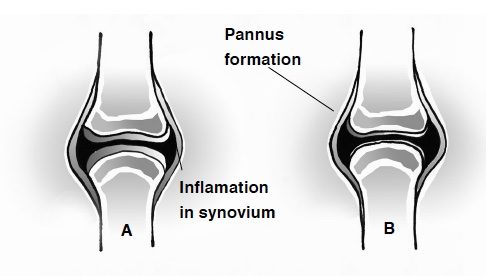
This is an autoimmune disorder that can cause aching and swelling in joints. When the body’s immune system wrongly identifies body cells as invaders, it fights and attacks good tissues, causing inflammation. The synovial membrane lining the joint is more susceptible to this type of attack than other areas (fig. 3). The inflamed synovium, when not treated, can potentially destroy the cartilage, bone, and soft tissues. This in turn can weaken ligaments, muscles, and bones.
Rheumatoid arthritis is more disabling than osteoarthritis. While osteoarthritis primarily affects the joints, rheumatoid arthritis can affect joints and the entire body, including the heart, blood vessels, lungs, and eyes. Another key difference between the two types of arthritis is that the pain and stiffness experienced in the mornings generally lingers for a much longer period in the case of rheumatoid arthritis.
The common symptoms associated with rheumatoid arthritis are:
- Pain and swelling in joints.
- Pain and stiffness in the joints in the morning.
- Warmth and redness in joints.
- Weakness in muscles attached to the affected joints.
- Low-grade fever.
- General sense of not feeling well.
- Weight loss.
- Deformity in joints.
Early diagnosis of rheumatoid arthritis is critical because it has the potential to cause permanent damage within a period of one to two years. Diagnosis of this type of arthritis is complex and the specialist may have to depend on a variety of tests for early diagnosis.
Other Musculoskeletal Conditions
In addition to arthritis, other problems associated with joints, bones, ligaments, tendons, muscles, and nerves can also cause joint problems. Because the symptoms of arthritis and musculoskeletal conditions are similar, correctly diagnosing the condition can be difficult. In this section, selected musculoskeletal conditions that are common among farmers are described.
Back Pain
Back pain is the most common musculoskeletal condi- tion among farmers. The area most susceptible is the lower back. Although this condition could result from any number of reasons, most often it is caused by injury (strain) to the muscle or ligament. Among farmers, this condition may occur because the joints are overstressed by lifting heavy weights and/or repetitive loading, or due to improper posture.
Although the back pain may last a few days, most pain can be treated with home and self-care. If the pain persists, you should consult a doctor.
Spinal Stenosis
This condition is caused by narrowing of the spinal canal. This puts pressure on the spinal cord and the nerves that branch out from the spinal cord, and it may result in numbness in legs, back, neck, shoulders, and arms.
Bursitis
Bursitis is caused by the repetitive stressing of an area around joints in the body. Repeated stressing of elbow and similar joints is common among farmers and farm workers. This overuse can cause inflammation of bursa, small fluid-filled sacs that lubricate and cushion pressure points between bones and tendons and muscles near joints. As a result of bursitis, even small movements may cause severe pain in shoulder, elbow, knee, and hip joints.
Tendonitis
Tendons attach muscles to the bones. Inflammation of these thick fibrous chords (tendons) causes tendonitis. Stressful use of tendons may cause tears, pain, and tenderness around the joints where the torn tendons are located. The most common joints affected by tendonitis are the shoulder, elbow, and knee.
Dealing with Arthritis
Early Diagnosis
Arthritis is not a life-threatening disease. However, if it is ignored and left untreated, arthritis can potentially cause irreversible joint damage and mobility problems that limit your ability to perform common farm chores and responsibilities. Farmers often delay seeking professional help for various reasons, such as work load, lack of health insurance, and myths like “pain comes with age.” Although there is no cure for arthritis, there are a number of advanced treatments that can prevent permanent damage to joints and minimize pain. Early diagnosis is the key to successful treatment. For this reason, as soon as arthritis symptoms appear, a doctor or specialist should be consulted. Early detection and treatment may allow individuals to continue farming pain-free for a longer period.
Protecting Your Joints
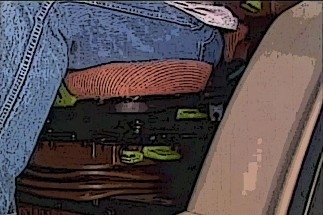
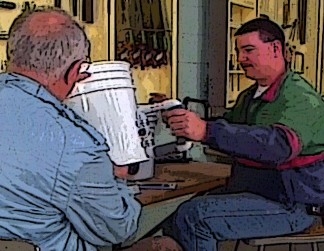
Many routine tasks associated with farming can be hard on joints because of the body’s constant exposure to low-frequency vibration, heavy loads, and repetitive motion. For example, tractor operators are constantly exposed to low-frequency vibration during tractor operation. While this vibration is hard on all joints, it is particularly hard on hip and back joints. A well-designed seat suspension system as shown in fig. 4 can isolate the operator from these low-frequency vibrations. Similarly, activities such as handling hay bales may result in repeatedly overstressing joints. Therefore, farm workers with arthritis should take extra precautions to avoid such activities whenever possible or make simple design changes on equipment to make tasks easier and to avoid additional joint damage. Figure 5 shows a modified feed bucket used to simplify the feed distribution task.
The most effective way to protect a joint is by strengthening the joint with exercise. Proper exercise can extend the life and usefulness of joints by strengthening the muscles around the joint. Exercise can also increase the flexibility and range of motion of joints. Thus, a balanced exercise program should include the following three types of exercises:
- Range-of-motion exercises to reduce joint stiffness and to keep the joint flexible. These exercises also help to extend the limits of joint movement. Stretching is an integral part of range-of-motion exercising. A series of commonly used stretch exercises is included in the Appendix.
- Strengthening exercises to maintain or increase muscle strength. Strong muscles may improve both joint stability and comfort. The exercise most commonly used for strengthening muscles is lifting weights.
- Endurance exercises to strengthen the heart and lungs. These exercises are good for improving your stamina and for keeping your weight under control. Examples are walking, bicycling, and swimming.
Your exercise routine and intensity may depend on your type of arthritis and the joints affected. Therefore, it is important that you select the routine and intensity in consultation with a physician.
About two-thirds of the adults in America are over-weight and half of these are obese. Excess body weight aggravates arthritis because it creates undue stress on body joints. Therefore, maintaining proper body weight through diet and exercise is important for arthritis patients. You should use assistive technologies as well to avoid overstressing your joints.
Treatments
Medications
Even though there is no known cure for arthritis, a number of drugs available today, ranging from over-the-counter to prescription to biological, are effective in reducing pain and inflammation and in slowing down the progression of arthritis. Again, the key is early diagnosis. A treatment plan that includes a combination of medication, non-drug therapies, and lifestyle modifications can be effective in keeping those with arthritis active and pain-free longer. Table 1 lists the different drugs used to treat arthritis with examples of brand names, functions, and some of their side effects. A more detailed listing of brand names in each category of drugs and side effects associated with each brand name is available in the Mayo Clinic’s book on arthritis (Chang-Miller 2013).
In addition to the side effects, you should also be concerned about drug interaction. Therefore, it is extremely important that you share information on the drugs you are taking with the specialist during consultation. This information, together with your personal history, will allow the specialist to develop an effective treatment plan.
| Drug Categories | Examples | Function | Selected Side Effects |
|---|---|---|---|
| Pain reducers | Tylenol, codeine, Demerol, Oxycontin, Ultram, aspirin,Bayer, Ecotrin | Control pain | Upset stomach, nausea, vomiting, dizziness, light-headedness |
| Non-steroidal anti-inflammatory drugs (NSAIDs) | Anacin, Bufferin, Advil, Motrin, Naprelan, Daypro | Control pain and inflammation | Dizziness, lightheadedness, stomach irritation, gastric ulcers and bleeding, cardiovascular problems |
| Cox-2 inhibitors | Celebrex | Control pain and inflammation | Cardiovascular problems, dizziness, diarrhea, stomach pain, urinary tract infection |
| Corticosteroids | Celestone, Decudron, Metrol, Prelone | Control inflammation and autoimmune activities | Weight gain, mood swings, sleeplessness, blurred vision, muscle weakness, high blood pressure |
| Disease modifying anti-rheumatic drugs (DMARDs) | Plaquenil, Azulfidine, Myochrisine, Minocin | Slow disease progression | Liver damage, stomach cramps, dizziness, headache, diarrhea, appetite loss |
| Immunosuppresants | Imuron, Cyloxan, Neoral, Arava, Troxall | Slow down immune system | Fatigue, heartburn, nausea, vomiting, kidney damage, high blood pressure, increased cancer risk |
| Biologic agents | Orencia, Humira, Kineret Enbrel, Ritaxan | Slow disease progression | Increased risk of lymphoma, indigestion, respiratory problems |
Disclaimer: Commercial products are named in this publication for informational purposes only. Virginia Cooperative Extension does not endorse these products and does not intend discrimination against other products which also may be suitable.
Surgeries
Surgical procedures are becoming more common to treat the effects of arthritis, but they are not the first choice because of the many risks associated with joint operations. Doctors only depend on surgical treatment when all other treatments fail to provide any relief. Many factors, such as strength of bones and ligaments supporting the joints, age, weight, and ability to participate in rehabilitation, determine success of surgery.
Many types of surgical procedures are available to treat joints affected by arthritis. The surgeon may recommend one or more of the following procedures, depending on patient’s age, overall health, type of arthritis, and specific joint problem.
- Arthroscopic debridement – Involves surgical removal of loose fragments of bone, cartilage, or synovium that cause joint pain, most often in the knees.
- Synovectomy – Involves removing some of the inflamed synovial tissues from affected joints to relieve pain.
- Cartilage replacement – Involves transplanting tissues from a healthy joint into the damaged joint along with a solution that stimulates cartilage growth.
- Osteotomy – Involves cutting and repositioning bones near a damaged joint to correct deformities caused by arthritis.
- Resection – Involves removing all or part of a damaged bone when an affected joint makes movement painful.
- Joint replacement (arthroplasty) – Involves reforming the joint by smoothing the ends of bones in a joint, replacement with artificial joints at the knee, hip, etc.
- Joint fusion – Involves removing a thin layer of tissue from the ends of two bones and binding them together often using pins, rods, or plates.
- Tendon and ligament adjustment – Involves tightening or loosening of tendons and ligaments to relieve pain and joint mobility.
Pain Control Tips
There are several special techniques you can use to obtain some relief from joint pains. Some of these are simple treatments that can be performed at home and others are treatments that require assistance of professionals. Selected examples of both types are:
Cold treatment – Ice pack and ice massages are recommended for occasional flare-ups. Cold treatment is not recommended for individuals with poor circulation.
Heat treatment – In addition to easing pain, heat increases blood flow to an affected region. However, heat is not recommended for swollen areas because it can increase swelling and pain. Hot packs, heating pads, heat lamps, and hot water (baths, showers, and whirlpools) may be used to apply heat to the desired regions.
Contrast bath – This involves exposing aching joints to warm and cold water intermittently and ending in warm water. This treatment often is more effective than either heat or cold treatment alone for treating rheumatoid arthritis and osteoarthritis in the hands or legs.
There are a number of treatments that professionals can administer to manage pain from arthritis. The following are selected examples of such treatments:
- Use of devices such as foot orthotics, lateral wedge inserts, and knee braces.
- Exercises to strengthen the muscles and increase mobility in the joints and massage to improve circulation.
- Specialized heat treatments by a professional.
- Steroid injections.
- Nerve block.
- Transcutaneous electrical nerve stimulation (TENS).
Farming With Arthritis
Arthritis can adversely affect a farmer’s ability to carry out daily activities associated with farming. There are many steps you can take to minimize or avoid permanent damage that arthritis can cause, or to continue your farming tasks while minimizing the pain. These steps are discussed in this section.
Scheduling Daily Activities
Arthritis patients experience pain and stiffness in joints in the morning. Depending on the type of arthritis, this pain and stiffness may go away in a short time. To avoid permanent damage and to slow down the progression of the condition, individuals with arthritis should avoid strenuous activities in the mornings when the joints are stiff and painful. You can do this by scheduling less strenuous jobs for the mornings and more strenuous jobs for later in the day when joints are not stiff.
Spend a few minutes each morning to prepare a prioritized list of tasks to be completed and to organize your day. Such a list will enable you to schedule alternating difficult and easier jobs with rest periods in between. Your daily schedule should also include time for exercise in the morning to loosen joints.
Work and Living Space Modifications
In addition to joint pain and inflammation, arthritis can also limit your mobility and reach. These side effects may limit what you as a farmer are able to do. Depending on the severity of the disease, work and living space alterations are often necessary to help with daily activities and minimize the risk of secondary injuries. Some selected examples of work place alterations are:
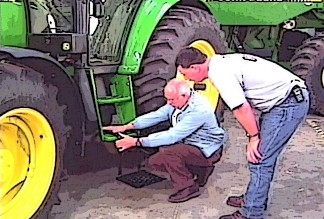
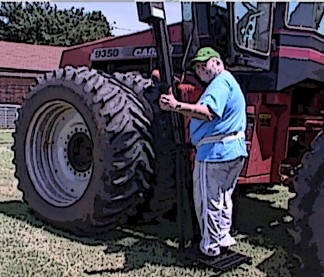
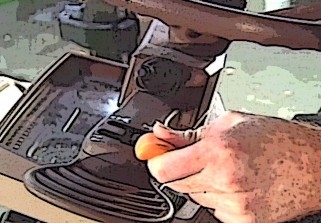
- Better access to the operator’s work space (figs. 6 and 7) on a tractor and relocating controls to minimize reach (fig. 8).
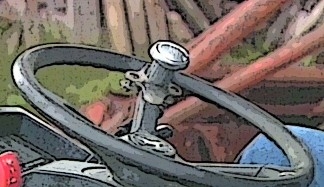
- Spinner knob on a steering wheel for improved grip and easy handling of a tractor (fig. 9).
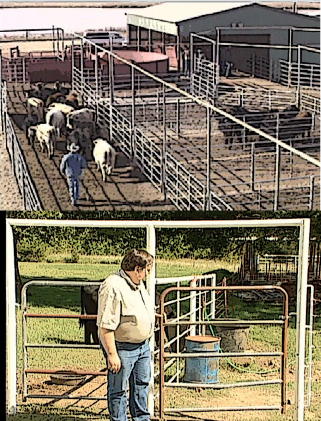
- Improved animal handling facilities (fig. 10).
- Examples of living space alterations may include replacing steps with a ramp for easy access and larger doorknobs for better grip.
Changing Operation
Most farming operations are physically demanding and labor-intensive. However, the labor requirements and intensity and schedule flexibility may depend on the type of operation. For example, a dairy operation may be more labor-intensive with less flexibility for rescheduling tasks than some other type of operation. For these reasons, a dairy operation may not be the best choice for someone with arthritis. In such a situation, one should consider changing the type of operation to some thing less demanding and more flexible. If changing the operation is not an option, scaling the operation down to a manageable level should be considered.
Role of Family Members
Family members can assist the person to deal and cope with arthritis in many ways. This assistance may include sharing responsibilities on the farm or carrying out simple treatments such as hot and cold treatments.
Use of Assistive Technologies
Arthritis limits the strength, mobility, and reach of joints. To protect the joints from permanent damage and to avoid secondary injuries, those affected by arthritis should consider using assistive technologies that can simplify the tasks and adjust to the limitations resulting from arthritis.
Selected examples of assistive technologies that can be used on farms are:
- Improved seat suspension systems on riding equipment.
- Extra steps to minimize reach.
- Mechanical lift to access the operator space.
- Relocation of controls to minimize reach.
- Spinner knob for steering wheels for better grip and ease in operation.
- Improved livestock handling facility with fence gates to improve efficiency and safety.
- Ergonomically designed lightweight tools with long handles.
- Handle wraps to improve grip.
- Pneumatic, self-adjusting tools.
- Extra mirrors on tractors.
- Arrange tools within reach.
- Lifts to move heavy items.
- Gel-filled knee pads.
- Props or extensions to control the equipment easily.
- Swivel mounts for seats.
- Docking station for attaching implements.
- Joint wraps and braces.
Sources of Assistance
The National AgrAbility Project has been established with the goal of assisting disabled farmers return to the work force and enable these farmers to continue farming. Numerous states have also established AgrAbility projects with similar overall goals. A number of agencies in Virginia are participating in the AgrAbility program to assist Virginia farmers. Different agencies provide different types of support. Additional information about participating agencies and the types of support they provide are available at the Virginia AgrAbility Project website at www.agrability.ext.vt.edu/.
Conclusions
Arthritis is not a life-threatening disease. However, if left untreated, it can result in permanent damage to joints. Early diagnosis and a treatment strategy that includes a combination of medication, exercise, and change in living style can allow farmers to continue with their daily farming activities for a longer period of time with minimum pain. Since arthritis adversely affects the strength and reach of joints, you should take care to avoid permanent damage and secondary injury by not overstressing the joint or exceeding its limit. In addition, farmers with arthritis should consider using assistive technologies available to minimize the strain on joints.
Acknowledgments
The AgrAbility Virginia Program is funded by the AgrAbility Project, USDA National Institute of Food and Agriculture (NIFA), Special Project 2019-41590- 30127. Administered by Virginia Tech, Virginia State University, and Easter Seals UCP North Carolina & Virginia, Inc. www.agrabilityvirginia.org The authors that developed this publication is solely responsible for its content, and it does not necessarily reflect the views of the USDA/ NIFA.
References
Chang-Miller, A., medical ed. 2013. Mayo Clinic on Arthritis: How to Manage Pain and Lead an Active Life. Rochester, MN: Mayo Foundation for Medical Education and Research. 334 pages.
Mariger, S. C., R. D. Grisso, J. V. Perumpral, A. W. Sorenson, N. K. Christensen, and R. L. Miller. 2009. “Virginia Agricultural Safety and Health Survey.” Journal of Agricultural Safety and Health 15 (1): 37-47
Appendix. Recommended Exercises
Before you begin any exercise program, you should consult your doctor or healthcare provider to see what type of exercises are best for you. You may even want to see a physical therapist for an assessment of your specific exercise and joint-protection needs. A physical therapist can help you get started with an exercise program, adapt exercises to avoid damage to your joints, and establish reasonable goals.
Also, keep in mind that only your doctor or health care provider should determine the types of activities for you to do during arthritis flare-ups. When a joint is warm, painful, and swollen, rest will help reduce the inflammation.
The good news is that you have the opportunity to improve both your health and your life by becoming more active. As a farmer, you are the only one who can make the commitment to start moving now. You will feel better if you start moving and keep moving.
IMPORTANT!! STOP exercising immediately if:
- There is pain or pressure in your chest.
- You are short of breath.
- You feel dizzy or sick to your stomach.
- You begin to have strong pain or more pain than usual.
As a farmer, what exercises should I do? There are several kinds of exercises and each has a different purpose. Flexibility or range-of-motion exercises keep your joints healthy and moving. Strengthening exercises build muscles around your joints so they are supported during daily activities. Endurance exercises are good for improving your overall health and to control your weight. All three kinds of exercise are important for farm-workers and others with arthritis.
If you can walk, walking is your best bet for a starter exercise. If you cannot walk, try a stationary bicycle with no resistance or do hand or arm exercises. It is good to move each joint in its full range of motion every day.
Flexibility Exercises
These exercises are good to maintain normal joint functions and relieve joint stiffness. Doing an assortment of these exercises for five to 10 minutes several times each day will produce the best results. Depending upon your capacity, you may increase the frequency of your exercise each day.
Start slowly and gently. Stretching should not be painful. Do not bounce or get up and down a lot. Whatever you do for your left side, do for your right side. It is best to use all your joints every day and move them through their entire range of motion. If you do not move in certain directions during your normal day, you should take care to exercise those joints. The joints you use during your regular daily routines do not need as much attention. Remember to breathe naturally as you do these exercises.
Do stretching exercises on a daily basis. They are easiest after a shower or bath when the muscle tissues are still warm. Do light flexibility exercises before the strengthening or aerobic exercises.
Your Neck:
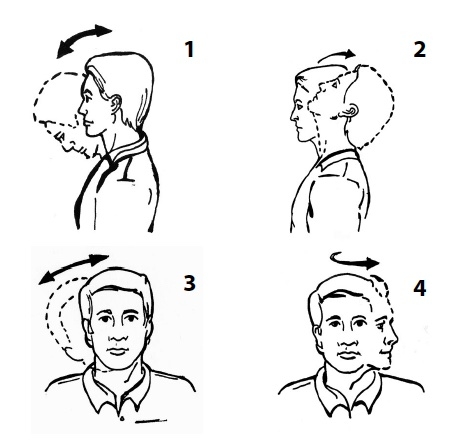
- Bring your head forward, as though to touch your chin to your chest (1). Return your head upright. Hold 15 seconds. Relax. Look straight ahead. Bend head backward (2). Hold 15 seconds. Relax. Repeat 5 to 10 times per set.
Tilt your ear to your left shoulder without raising your shoulders (3). Return your head upright. Repeat to the right. Hold each position 15 seconds. Repeat to the other side. Repeat 5 to 10 times per set.
Turn your face to the left, keeping neck, shoulders, and trunk straight (4). Repeat to the right. Hold each position 15 seconds. Return to front. Repeat to the other side. Repeat 5 to 10 times per set.
Your shoulders:
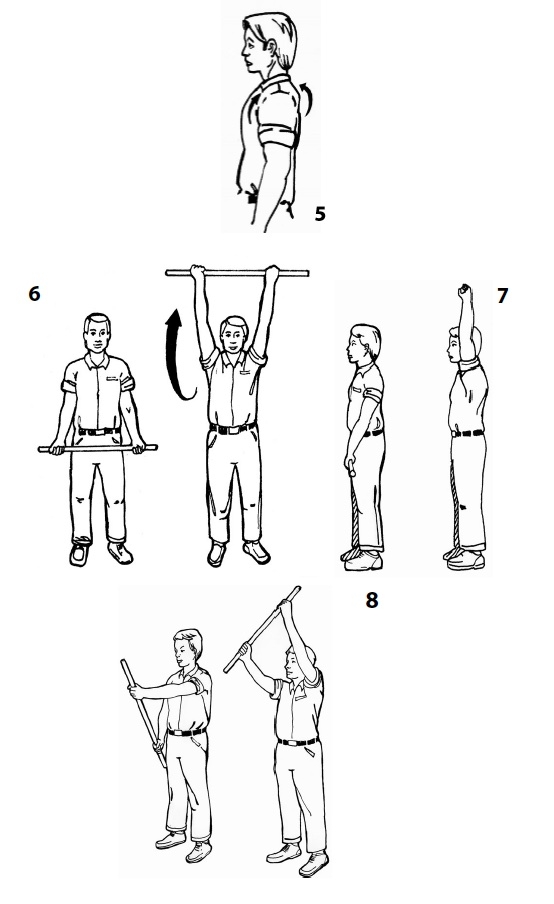
With your arms at your side, roll your shoulders forward in a circular motion (5). Reverse.
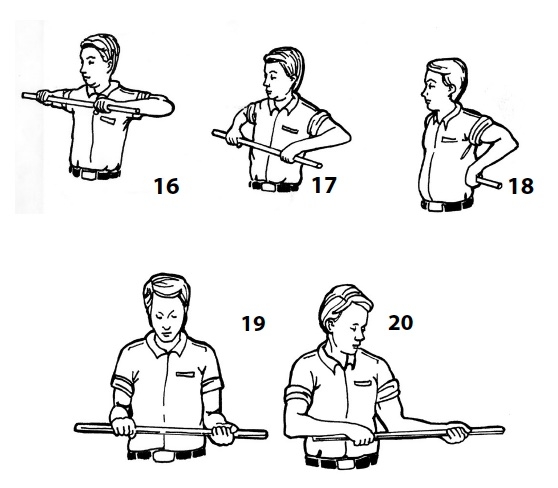
Stand with your feet shoulder-width apart. Hold a cane, broomstick, or wand comfortably with both hands (6). Raise the cane forward and upward over your head (7). Return to the starting position. Repeat. Hold each position 15 seconds. Repeat 5 to 10 times per set. You may place your palms up (as in 7 illustration) or down.
To exercise one arm, hold the cane vertically in front of you. Place the arm to be exercised higher on the cane (8). Your lower arm may push to help raise your upper arm. Hold each position 15 seconds. Repeat 5 to 10 times per set.
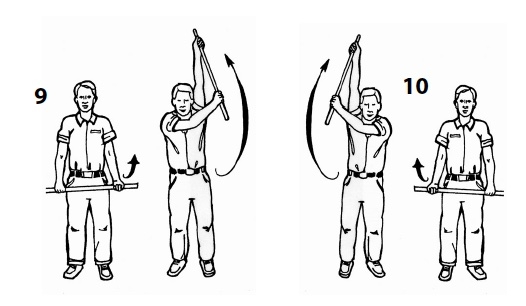
Stand with your feet shoulder-width apart. Grasp the cane with both hands, palm up on the hand you are exercising (9). Raise your arm out to the side (not in front of you). Continue, until your arm touches your ear. Return to the starting position. Change hands and repeat (10). Hold each position 15 seconds. Repeat 5 to 10 times per set.
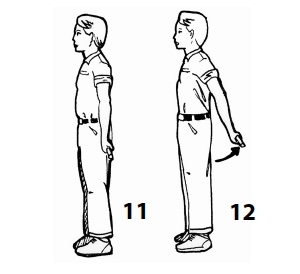
Stand with your feet shoulder-width apart. Hold the cane behind your back, with your hands shoulder-width apart (11). Slowly move the cane backward and upward, keeping your elbows straight (12). All movement should come from your shoulders. Do not lean forward to get more motion. Return to the starting position. Repeat 5 to 10 times per set.
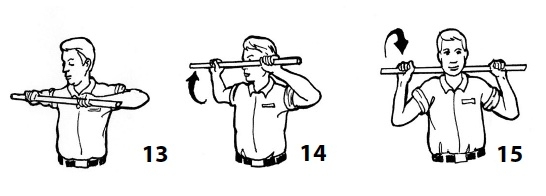
With your arms out to your sides, bend your elbows and hold the cane in front of your chest (13). Gently move the cane in an upward arc toward your head (14). Try not to move your upper arms. Repeat. Move the cane over your head and lower it to the base of your neck (15). Repeat 5 to 10 times per set.
With your arms out to your sides, bend your elbows and hold the cane in front of your chest (16). Gently move the cane in a downward arc toward your stomach (17). If you can, position the cane behind your hips, with your palms facing behind you. Slowly raise the cane up along your back toward your shoulder blades (18). Repeat 5 to 10 times per set.
With your upper arms against your body, bend your elbows and grasp the cane with palm up on the arm that will move outward (19). The palm on the arm that will move inward faces down. Gently slide the cane across your body so that one forearm swings inward toward your stomach (20). Change palm positions and repeat. Repeat 5 to 10 times per set.
Place your right palm behind your neck and the back of your left hand in the small of your back. Gently attempt to touch your hands behind your back. Reverse.
Clasp your hands behind your head. Slowly breathe in as you gently move your elbows back and release your breath as you relax your elbows forward.
Bring both elbows to shoulder height. Ease your elbows backward and feel a slight (not painful) stretch in your chest muscles.
Your hands and fingers:
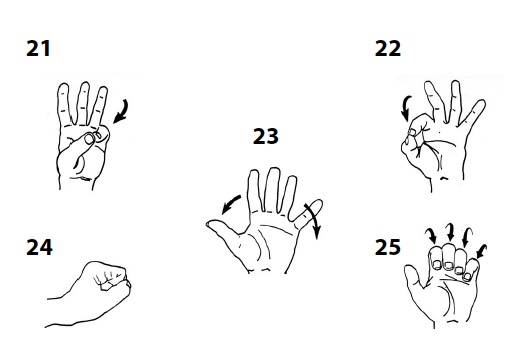
Bend your thumb across your palm to touch your little finger (21). Hold 15 seconds. Relax. Then straighten fingers as far as possible. Repeat 5 to 10 times per set.
Straighten your fingers (23). Relax and repeat with each hand. Make an “O” by touching your thumb to each fingertip (22). Open your hand wide (23). Hold 15 seconds. Relax and repeat. Then straighten your fingers as far as possible. Repeat 5 to 10 times per set.
Bend and straighten the end and middle joints of your fingers (25). Keep your knuckles straight. Hold 3 seconds. Straighten your fingers again. Relax and repeat with each hand. Repeat 5 to 10 times per set.
Bend your fingers to make a fist. Bend each joint as much as possible (24). Relax and repeat with each hand. Repeat 5 to 10 times per set.
Your elbows:
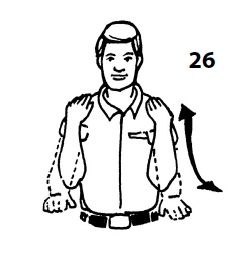
Bend both elbows, bringing your forearms up until your fingers touch your shoulders (26). Straighten arms. Repeat 5 to 10 times per set.
Keep your upper arms next to your body while bending your elbows to form a right angle. Turn your palms toward the ceiling, then toward the floor. Repeat 5 to 10 times per set.
Your wrists:
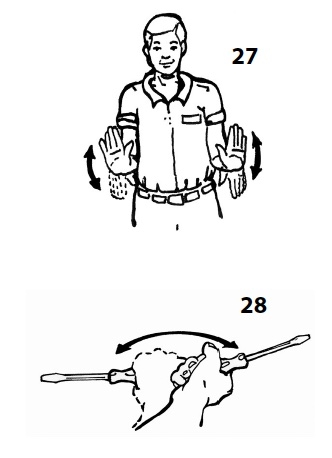
- Keep your upper arms at your side and bend your elbows to form a right angle. Hold your hands out with your thumbs facing upward (27). Move both hands toward your stomach, then facing out as far as possible. Repeat 5 to 10 times per set.
- Tuck elbows at your sides. While holding a tool (screwdriver or kitchen item), slowly turn palms down until stretch is felt (28). Hold for 15 seconds. Then slowly turn palms up until stretch is felt and hold again for 15 seconds. Repeat 5 to 10 times in each direction.
Your hips:
While standing, lift your knee toward your chest to make a right angle. Alternate legs to march in place. Try this while lying on your back, too. Keep one leg extended as the other leg is bent. Grasp the back of the thigh of your bent leg and gently pull it toward your chest. Don’t force your leg. Repeat with the other leg.
Stand and face a chair. Hold onto the back of the chair for support. Gently move one straight leg out to the side and return. Repeat with the other leg. You can also do this exercise lying down, sliding one leg at a time out to the side and back to midline.
Lie on your back, feet together, toes pointed up. Slide one leg to the side. Keep your toes pointed to the ceiling. Turn your foot in, then out. Return your leg to midline. Repeat with the other leg.
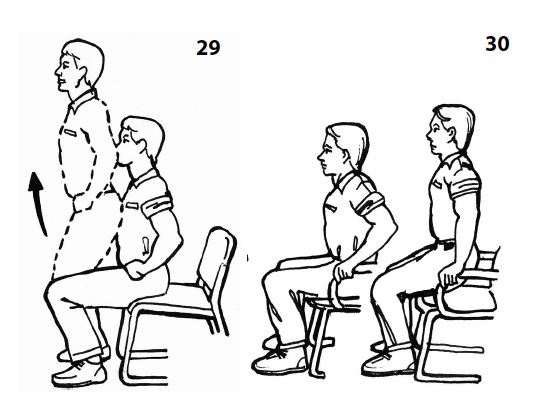
Sit to stand from a chair. Sit on edge of chair, feet flat on floor. Keeping your back straight, slowly stand up and slowly sit back down (29). Repeat 5 to 10 times. If exercise is too hard, use a chair with armrests. Use your arms to push against the armrests (30) in order to move from sit to stand.
Your knees:
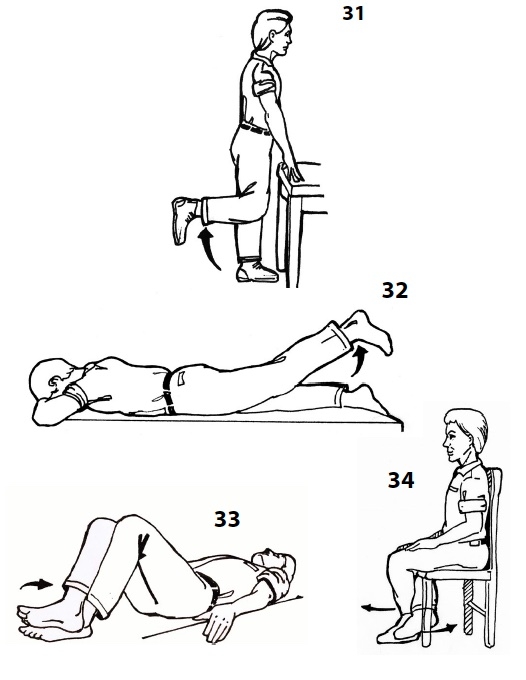
Hold onto the back of a chair or table as you stand on one foot. Keep your knees together. Gently flex your knee and bring one foot up (31). Alternate. Don’t arch your back. You can do this lying on your stomach, with a pillow supporting your stomach and hips. Keep one leg extended. Bring the other foot up toward the back of your thigh by bending your knee (32). Don’t force your knee to an uncomfortable angle. Return your leg to an extended position. Repeat with the other leg.
Lie on your back. Bend your knee to place one foot flat. Slide the heel as close to your buttock as possible, then extend. Use other leg to right gently push until stretch is felt (33). Hold 15 seconds. Relax. Repeat with the other leg. Repeat 5 to 10 times per set.
Sit in a chair with your ankles crossed. Push your feet against each other. Gently push right leg back with other leg until a stretch is felt (34). Hold 15 seconds. Relax. Re-cross bent legs at ankles. Slowly straighten legs, pushing with lower leg. Hold for 15 seconds. Repeat 5 to 10 times per set.
Your calves:
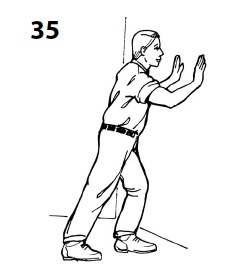
Stand an arm’s length from the wall, with one foot forward. Place your hands on the wall at shoulder level (35). Keep your back straight as you lean toward the wall with your hips (but not to the point of pain). Relax and repeat with the other leg.
Your hamstrings:
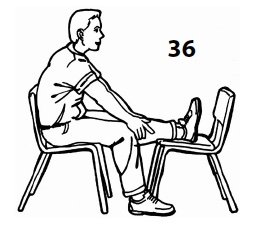
Sit in a chair with one leg on another chair (36). Keep your back straight. Slowly bend forward at your hip until you feel a slight stretch in the back of your thigh. Repeat with the other leg.
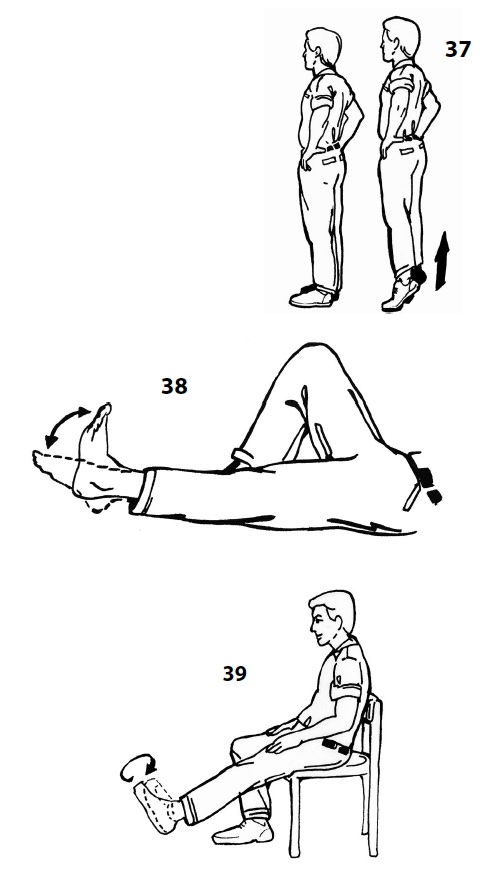
Your ankles and feet (skip these exercises if they are painful):
Stand with your feet about 12 inches apart. Rise to your toes with both feet (37). Relax to the starting position. Rise to the toes of your right foot. Relax. Rise to the toes of both feet. Relax. Rise to the toes of your left foot. Hold 3 to 5 seconds. Relax. Repeat 5 to 10 times per set.
Walk on your heels.
- Walk on your toes.
- Walk heel to toe, as if on a tightrope.
While standing, lift your left foot and place it to the right of your right foot. Repeat with left foot planted, placing your right foot to the left of your left foot. This is called braiding.
Pointing toes while lying down or while sitting. With leg relaxed, slowly pull foot back, pointing toes toward the ceiling (38). Move foot in opposite direction and point toes down toward the floor. Avoid pain. Switch to opposite side and repeat. Repeat 5 to 10 times for each side.
Sit up straight in a chair, one foot extended in the front. Turn sole of foot in and out. Move foot around in a slow, large circle (39). Change directions.
Remember
Seek medical advice before you begin any exercise program. Your doctor or physical therapist can instruct you in exercise suited to your specific needs.
Virginia Cooperative Extension materials are available for public use, reprint, or citation without further permission, provided the use includes credit to the author and to Virginia Cooperative Extension, Virginia Tech, and Virginia State University.
Virginia Cooperative Extension is a partnership of Virginia Tech, Virginia State University, the U.S. Department of Agriculture, and local governments. Its programs and employment are open to all, regardless of age, color, disability, sex (including pregnancy), gender, gender identity, gender expression, national origin, political affiliation, race, religion, sexual orientation, genetic information, military status, or any other basis protected by law
Publication Date
April 10, 2020