Preventing Secondary Injuries in Agricultural Workplaces
ID
442-085 (BSE-316P)
Abstract
Agriculture is recognized as one of the most hazardous occupations in the United States. According to research statistics, 6 of every 1,000 agricultural workers experience either primary or secondary injuries. As the average age of American farmers and ranchers steadily increases, opportunities for secondary injuries also increase significantly due to more farmers with existing disabilities and/or injuries engaging in physically demanding agricultural activities. The impact of a secondary injury can be devastating to the individuals involved, as well as to their families, because recovery can be extremely slow.
The intent of this fact sheet is to reduce the number of secondary injuries by familiarizing the readers with secondary injuries and the steps they can adopt to minimize them. In addition to identifying common secondary injuries and the most vulnerable groups, the publication discusses steps that can be taken to prevent such injuries.
Introduction
Agriculture is recognized as one of the most hazardous occupations in the United States. Nearly 42,000 adults have experienced either primary or secondary injuries from agricultural-related operations. This translates into a rate of 6 injuries per 1,000 adult farm workers (NASS 2013). Without intervention, there is potential for this rate to increase as the average age of farmers and ranchers increases and as more farmers continue farming with existing age-related or other disabilities and/or injuries.
Existing disabilities and injuries may adversely affect both reaction time and motor skills. Therefore, individuals with injuries and/or disabilities engaged in physically demanding and otherwise dangerous agricultural operations significantly increase their chance of secondary injuries. The impact of secondary injuries on individuals already trying to manage a primary injury can be devastating. In many situations, secondary injuries may cause permanent damage because pre-existing conditions are worsened by additional injuries. In other situations, it may result in additional recovery time. The impact of a secondary injury on a farmer’s family can also be profound.
The goal of this fact sheet is to familiarize farmers and ranchers with secondary injuries and how those injuries may influence their daily living. In addition to defining secondary injuries, topics include examples of common secondary injuries, groups vulnerable to secondary injuries, steps and assistive technologies to prevent secondary injuries, and sources of assistance for those suffering from secondary injuries.
Secondary Injuries
In simple terms, secondary injuries can be defined as injuries resulting from a previous injury. For example, an injured knee could throw off one’s biomechanics and cause back problems – a secondary injury. Researchers define a secondary injury as one that forces the victim to miss three or more days from work/exercise and occurs within one year of the previous injury. Often, a secondary injury goes unnoticed because of the time that lapsed since the previous, seemingly unrelated injury. Pain from a sprained joint may disappear after a few weeks or months.
However, this does not mean that the joint is fully rehabilitated. If complete strength is not restored in the injured joint, the habit of favoring a joint may cause pain in another joint. Secondary injuries can form mental issues. For example, problems associated with a primary injury may lead to depression – a secondary injury (Grisso et al. 2008).
To prevent secondary injuries, one must understand primary injuries and the body’s healing process. There are two types of primary injuries: intrinsic and extrinsic. Intrinsic injuries are caused by forces generated within the body (examples: muscle tears, tendonitis, ligament strains, and stress fractures). Extrinsic injuries are caused by forces outside the body and are known as accidents (example: injuries caused by tractors and livestock).
Intrinsic injuries can be further subdivided into two categories: acute and chronic. Acute intrinsic injuries occur spontaneously when one tries to exceed the limits of his/her body (example: taking a sudden turn and something “gives”). A chronic intrinsic injury results from continuously stressing the body without giving it adequate time to heal (examples: stress fractures and tendonitis).
Generally speaking, work, exercise, and similar activities increase the amount of fluids in tissues. These fluids dissipate after a short period of rest. On the other hand, if the rest period is not long enough for full dissipation of the fluid, swelling and increased pressure may occur. If the situation continues and the trauma is repeated, the tissues may become fibrous and scarred, losing strength and flexibility. If work and other similar activities are continued, weakness from the existing injury can cause secondary injuries.
Existing disabilities and other age-related conditions can also be considered primary injuries. Such disabilities have the potential to adversely affect the operator’s reaction time, motor skills, visibility, and hearing. When operators with these limitations engage in dangerous and physically demanding farming activities, there is potential for secondary injuries.
Secondary injuries – from simple cuts to multiple bone fractures to mental illnesses – may require specialized medical assistance. Selected examples of existing conditions and secondary injuries may include the following:
A farmer with arthritis may damage previously affected joints by continuing farming activities that require heavy lifting (see Arthritis and Farming).
Those with back or joint pain have a tendency to favor healthy limbs. Continued favoring has the potential to over-work and damage the good limbs.
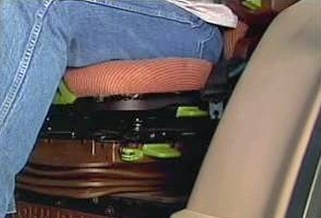
Exposure to low frequency vibration from riding on a tractor for long hours can aggravate existing back problems (figure 1).
- Chronic health problems and other disabilities may increase mental issues, such as depression.
The impact of secondary injuries on farm workers can be devastating because it complicates their health and work status by placing an additional burden on them and their families. The fact that damage from secondary injuries is often irreversible or recovery time can be long creates additional stress on all involved.
Farmers Vulnerable to Secondary Injuries
The group most vulnerable to secondary injuries is older farmers and ranchers. Many of them are already dealing with age-related disabilities and/or other injuries. Both age and existing disabilities or injuries may adversely affect reaction time, motor skills, and ability to balance. These limitations – along with the refusal to make adjustments and/or to recognize the previous injury or disability – make senior farmers and ranchers more vulnerable to secondary injuries, although they are more experienced.
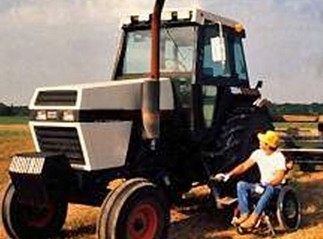
Individuals of all ages with disabilities and/or other handicaps are also vulnerable to secondary injuries. For example, individuals confined to wheelchairs are susceptible to secondary injuries when they continue to carry out agricultural operations.
Leg and hand amputees with prosthetic devices are also prone to secondary injuries. Most farmers using prosthetic legs experience back pain because their work involves walking on uneven surfaces. Prostheses can also cause secondary injuries when they become entangled in something while working.
Irrespective of age, when individuals engage in high-risk farming operations with pre-existing disabilities or injuries, the opportunities for secondary injuries increase significantly.
Disabilities, Injuries, and Other Conditions That Cause Secondary Injuries
Estimates show that approximately 288,000 agricultural workers from ages 15 to 79 have a disability that affects their ability to perform one or more essential farming-related tasks. The disabilities experienced may be age-related or due to other causes.
The national trend shows that the average age of farmers in the United States is increasing steadily (the average age of Virginia farmers is 59). This may mean that
more and more farmers are carrying out their farming operations with age-related diseases and disabilities such as arthritis, heart disease, stroke, impaired vision, and hearing loss (Allen, Frick, and Field 1995; Browning et al. 1997). These types of impairments adversely affect operator reaction time and motor skills and cause secondary injuries when farmers engage in more dangerous agricultural operations.
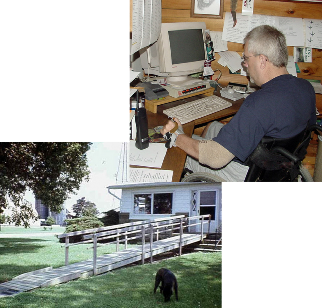
A significant number of individuals in wheelchairs due to spinal-cord injuries and other diseases and amputees with prostheses are engaged in farming on a full-time basis (figure 2). These individuals risk secondary injuries when they work on uneven surfaces and when they mount or dismount tractors. Injuries due to prosthetic devices getting tangled with weeds and ropes are also recognized as common problems.
Common Secondary Injuries
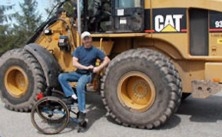
To a large extent, the secondary injury experienced by an agricultural worker depends on the type of disability or primary injury the worker is dealing with when engaged in farming operations. For example, a farmer confined to a wheelchair due to pre-existing conditions may experience a different set of injuries than an amputee with a prosthesis (figure 3).
Navigating a wheelchair on uneven surfaces can be extremely hard, with the potential for serious secondary injuries to shoulders, wrists, backs, and other body parts.
Farmers using a prosthesis due to an upper or lower extremity amputation may also experience secondary injuries due to slips, falls, prosthesis entanglements, overuse injuries of the opposite limb, and injuries to the residual limb (the “stump”). Handling livestock and falls have been identified as the primary causes for secondary injuries among farmers with disabilities or other primary injuries (Allen, Field, and Frick 1994). Common injuries from these sources include bruises/pressure sores, cuts, crushed body parts, sprains/strains, fractures, and amputations. In addition to falls, most farm operators with prostheses experience sores and blisters to their stumps, particularly during summer-time. Lack of insulation in the socket of the prosthesis may also cause irritation to the stump during winter months. Prosthesis entanglement often causes falls.
Preventing Secondary Injuries
Most agricultural operations are high-risk operations. For this reason, the straightforward approach to avoiding secondary injuries is for individuals with disabilities and primary injuries to not take an active role in farming. Often this is not an acceptable option, in which case the farmer should make every effort to avoid high-risk activities. For example, activities such as handling livestock, working on elevated locations, and machine maintenance have all been identified as high-risk operations (Mariger et al. 2009; Allen, Frick, and Field 1995). If avoiding high-risk activities is also not an option, the operator must make every effort to adapt assistive technologies that can reduce the risk of
secondary injuries. Making changes to living and working environments to accommodate individuals with disabilities is also extremely important to reducing the risk of secondary injuries. To a large extent, both will depend on the type of disability or primary injury the individual is dealing with. Following is a partial list of assistive technologies found useful for minimizing the risk for secondary injuries:
Alter living and working areas to make them wheelchair friendly (figure 4).
Replace manual wheelchairs with powered chairs or scooters to avoid wrist, hand, and shoulder injuries.
Place rubberized, nonslip surfaces on heavily used concrete floor areas.
Wear corrective or improved footwear for back and arch support.
Wear clothing with large zippers or snaps to help get clothing on and off.
Provide mechanical lifts to allow wheelchair users and those with limited mobility to access machine platforms (figures 5 and 6).
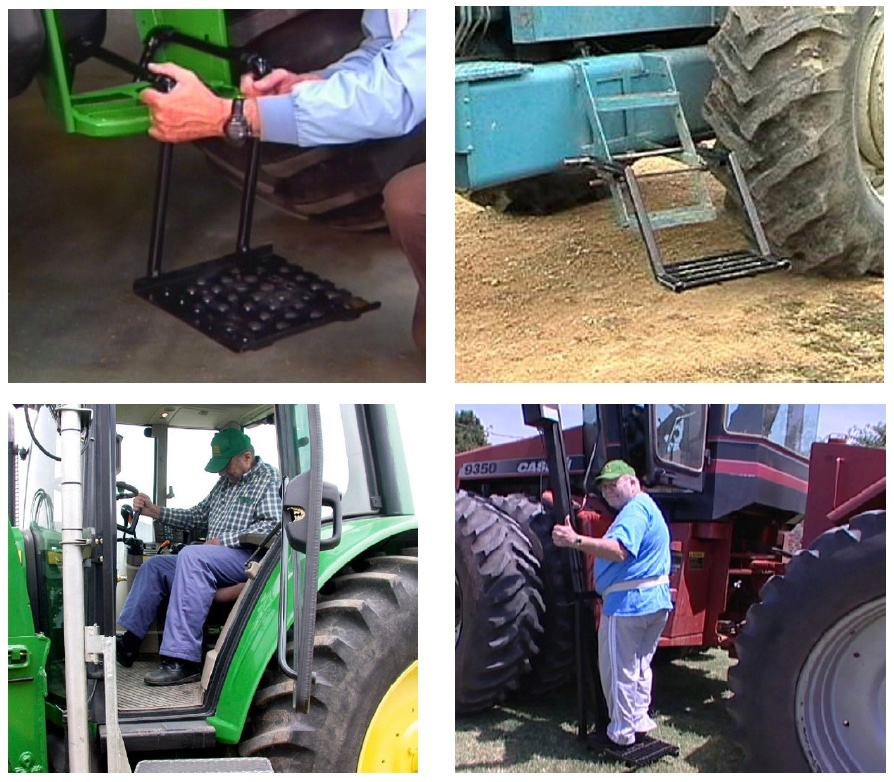
Provide extra steps on farm equipment and vehicles to minimize reach (figure 6).
Equip machines operated by individuals with disabilities with fire extinguishers and communication systems such as cell phones and two-way radios.
Provide adequate lighting in areas used for mounting and dismounting machines to avoid falls.
Reconfigure livestock handling facilities with fence gates to improve efficiency and safety.
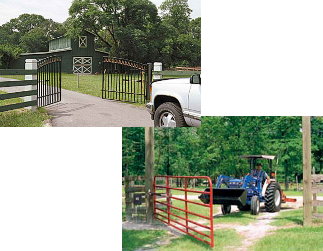
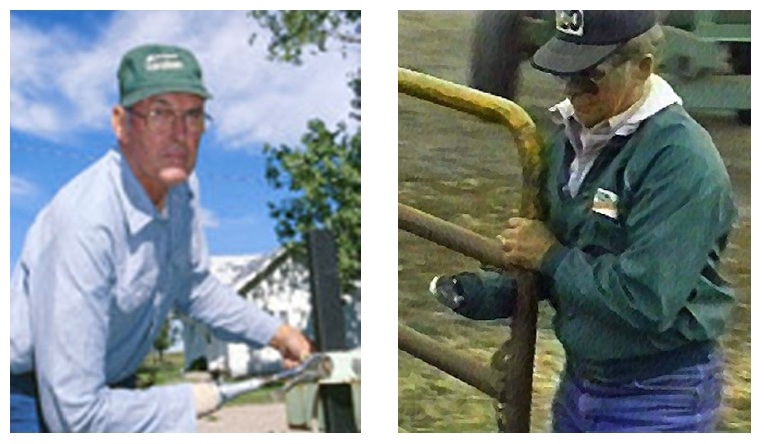
Replace manual gates with power gates (figure 7).
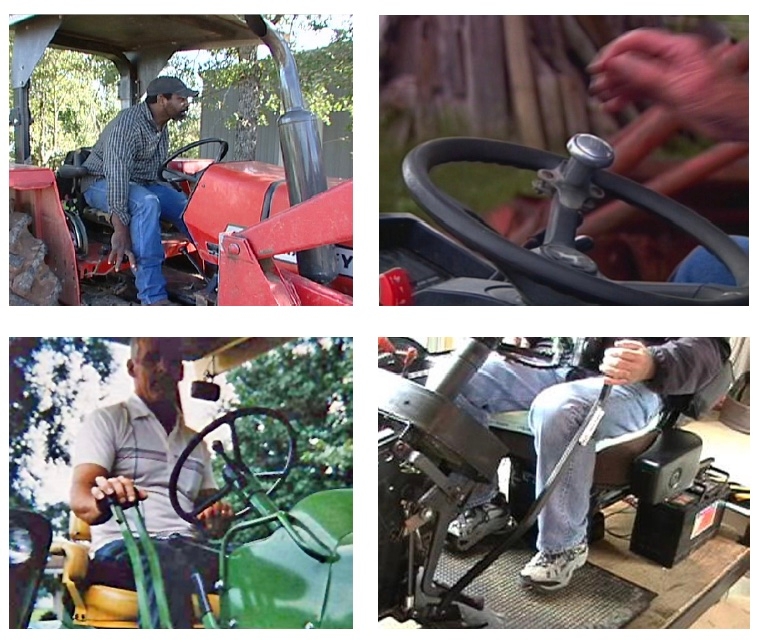
Modify and relocate machine controls to accommodate individuals with disabilities (figure 8).
Provide improved seat suspension systems to avoid back problems (figure 1).
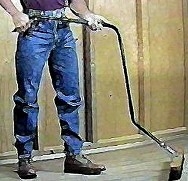
Use lightweight tools with long handles (figure 9).
Add handle wraps to improve grip.
Use pneumatic self-adjusting tools.
Use magnified lenses for welding and grinding activities.
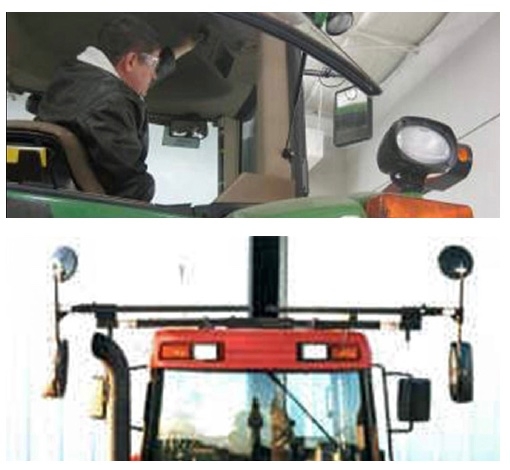
Add extra mirrors to equipment to improve visibility (figure 10).
Arrange tools within reach.
Use mechanical lifts to move heavy items.
Use gel-filled kneepads.
Use swivel mounts for seats.
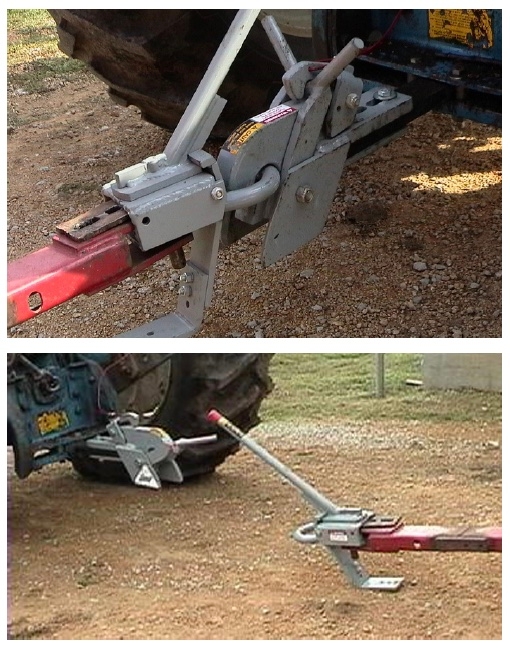
Use docking stations for attaching machines (figure 11).
Use joint wraps for braces.
Concluding Remarks
The impact of secondary injuries on individuals and their families can be devastating because the injury may be permanent or recovery can be extremely slow. Individuals with existing disabilities or injuries should avoid physically demanding agricultural activities to avoid secondary injuries. If and when this is not a viable option, the use of proper assistive technologies to minimize the incidence of secondary injuries must be adopted.
References
Allen, P. B., W. E. Field, and M. J. Frick. 1994. Assessment of work-related injury risk for farmers and ranchers with physical disabilities. Journal of Agricultural Safety and Health 1(2): 71-81.
Allen, P. B., M. J. Frick, and W. E. Field. 1995. The safety education training needs of farmers and ranchers with physical disabilities. Journal of Agricultural Education 36(3): 50-56.
Browning S. R., H. Truszczynska, D. Reed, and R. H. McKnight. 1998. Agricultural injuries among older Kentucky farmers: The farm family health and hazard surveillance study. American Journal of Industrial Medicine 33(4): 341-53.
Grisso, R. D., S. C. Mariger, S. S. Wong, J. V. Perumpral, N. K. Christensen, R. L. Miller, and A. W. Sorenson. 2008. Depression as a Risk Factor for Agricultural Injuries. Paper (No. 084166) presented at the annual international meeting of ASABE, Providence, R.I.
Grisso, R. D., J. V. Perumpral, S. C. Mariger, D. E. Suttle, K. Funkenbush, and K. Ballin. 2020. Arthritis and Farming. VCE publication 442-083.
Mariger, S. C., R. D. Grisso, J. V. Perumpral, A. W. Sorenson, N. K. Christensen, and R. L. Miller. 2009. Virginia agricultural safety and health survey. Journal of Agricultural Safety and Health 15(1): 37-47.
Mathew S.N., W.E. Field, and B.F. French. 2011. Secondary injury potential of assistive technologies used by farmers with disabilities: findings from case studies. Journal of Agromedicine. 16(3):210-25.
McNeil, J. M. 2000. Employment, Earnings, and Disability. Paper presented at the 75th Annual Conference of the Western Economic Association International, Vancouver, British Columbia.
NASS. See National Agricultural Statistics Service.
National Agricultural Statistics Service. 2013. 2009 Adult Agricultural-Related Injuries. Washington, D.C.: U.S. Department of Agriculture.
VDACS. 2014. Virginia Agriculture Facts and Figures. Virginia.gov Database. Richmond, VA: Virginia Department of Agriculture and Consumer Services.
Willkomm, T.M ., and M. Novak. 2008. Secondary injuries experienced by farmers using a wheelchair or a prosthetic device. Paper (No. 080036) presented at the annual international meeting of ASABE, Providence, R.I.
Acknowledgments
The author also acknowledges the coauthors for their contributions of the previous version: John Perumpral, Don Ohanehi, and Kirk Ballin.
This publication was developed with the support of National Youth Farm Safety Education and Certification (Grant No. USDA/NIFA-2010-41590-20697), National Institute of Food and Agriculture, and the U.S. Department of Agriculture. The authors tha developed this publication is solely responsible for its content, and it does not necessarily reflect the views of the USDA/ NIFA.
Virginia Cooperative Extension materials are available for public use, reprint, or citation without further permission, provided the use includes credit to the author and to Virginia Cooperative Extension, Virginia Tech, and Virginia State University.
Virginia Cooperative Extension is a partnership of Virginia Tech, Virginia State University, the U.S. Department of Agriculture, and local governments. Its programs and employment are open to all, regardless of age, color, disability, sex (including pregnancy), gender, gender identity, gender expression, national origin, political affiliation, race, religion, sexual orientation, genetic information, military status, or any other basis protected by law
Publication Date
April 16, 2020