2907-1401
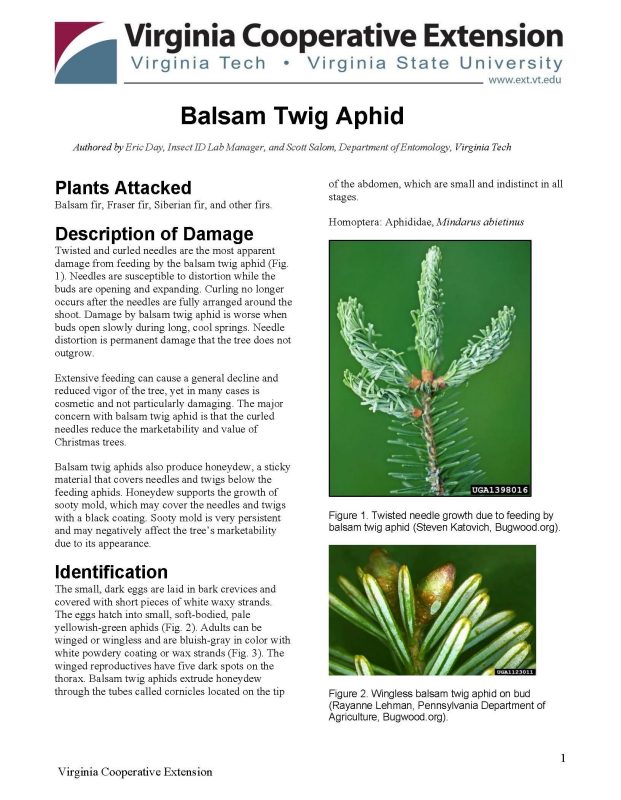
Fig. 1: Balsam Twig Aphid damage [S Katovich, USDA Forest Service, Bugwood.org]
PLANTS ATTACKED: Balsam fir, Fraser fir, Siberian fir, Subalpine fir, White spruce, Colorado blue spruce, and Juniper.
DESCRIPTION OF DAMAGE: Twisted and curled needles are the most apparent damage from feeding by the balsam twig aphid. Feeding can also cause roughened bark on the twigs. Extensive feeding can cause a general decline and reduced vigor of the tree, yet in many cases is cosmetic and not particularly damaging. The major problem is that curled needles reduce the marketability and value of Christmas trees.
Balsam twig aphids also produce honeydew, a sticky material that drops to needles and twigs below. Honeydew gives the needles a shiny appearance, but is usually washed off by rain within a few weeks. At times the honeydew can become a growth medium for sooty mold, which turns the needles and twigs black.
IDENTIFICATION: The small brown balsam twig aphid eggs are laid in bark crevices and covered with white waxy filaments. The eggs hatch into small, soft-bodied, pale yellowish-green aphids. Adults can be winged or wingless. The wingless adults are bluish-gray in color. The winged aphids, also known as winged reproductives, have five dark spots on the thorax. The cornicles or "honey tubes" are small and indistinct in all stages. The balsam twig aphid, Mindarus abietinus, is in the order Homoptera, family Aphididae.
LIFE HISTORY: The balsam twig aphid has a complex life cycle that includes four different adult stages. First generation females emerge from overwintering eggs throughout April and up until mid-May. The female adults then give rise to wingless aphids from May to mid- June or winged aphids from mid-May to mid-June. The winged adults will fly to other trees and produce winged reproductives, which will oviposit on the tree from early to mid-June. Thereafter, only the eggs are present. They will remain dormant until the following spring. Overwintering eggs are primarily found at the base of the needles and on the stems of the most recent growth.
|
|
CONTROL: Proper cultural techniques along with maintenance of vigorous tree growth should minimize the impact of balsam twig aphid. Since much of the injury is only temporary and much of the permanent
Virginia Cooperative Extension materials are available for public use, re-print, or citation without further permission, provided the use includes credit to the author and to Virginia Cooperative Extension, Virginia Tech, and Virginia State University.
Issued in furtherance of Cooperative Extension work, Virginia Polytechnic Institute and State University, Virginia State University, and the U.S. Department of Agriculture cooperating. Rick D. Rudd, Interim Director, Virginia Cooperative Extension, Virginia Tech, Blacksburg; Wondi Mersie, Interim Administrator, 1890 Extension Program, Virginia State, Petersburg.
August 5, 2009