Clothes Moths
ID
3104-1576 (ENTO-471NP)
Introduction
In Virginia, two species of clothes moth in the genus Tineola damage wool and other products made from animal fibers, leather, feathers, and similar materials containing the protein keratin. Clothes moths belong to the family Tineidae in the order Lepidoptera.
Description
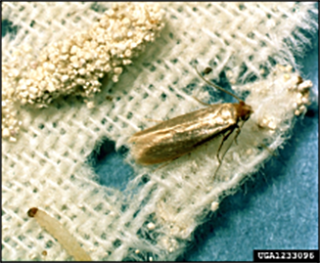
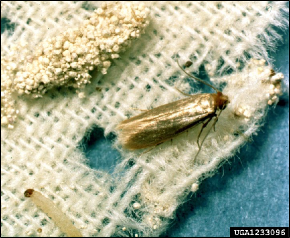
The webbing clothes moth, Tineola bisselliella, is commonly found under wool carpets; in folds of wool curtains, tapestries, and fabrics; or where animal hides rest on a floor or against another surface. The larva is a pale, shiny, hairless caterpillar that measures up to 13 mm (0.5 inch) long. Sometimes the caterpillars take on the color of the wool on which they feed because the dye shows through their bodies. The caterpillars make webbed tunnels or patches of webbing for protection (Fig. 1). They also leave numerous pellet-like droppings. The adult webbing clothes moth is a very small, metallic buff-yellow moth with long, narrow wings and a tuft of long hairs on the head (Fig. 1).
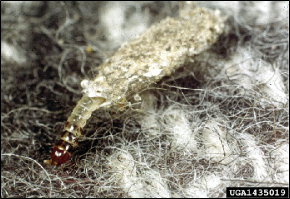
The casemaking clothes moth, Tineola pellionela, is commonly found on yarn, wool clothes, wool rugs, and animal hides such as lambskin rugs. The caterpillars measure up to 13 mm (0.5 inch) long. The caterpillars create tubular silken bags from their food source and carry them around for protection (Fig. 2). This bag often matches the color of their food source, helping them blend in their environment.
The first indication of casemaking clothes moths are often its tiny caterpillars crawling out of boxes and bags that contain wool or hides, making their presence known as little moving spots on the wall. The adult casemaking clothes moths are very small, yellowish to slightly gold-colored moths with narrow, slightly pointed wings. They are not attracted to lights and usually hide when disturbed.
Habitat
Both species of Tineola are found in houses or buildings with wool carpets, blankets, clothing, and other woolen fabrics; taxidermy animal mounts or hides; items made from bird feathers; and sometimes other fabrics such as cotton or synthetic fibers if blended with a high percentage of wool or silk.
Items stained with food or body oils are particularly attractive to these caterpillars. They do not attack carpets made of synthetic material.
Outdoors, the caterpillars of these moths are found on dead animal hides, or in animal nests or dens containing large amounts of animal fur.
Life Cycle
Clothes moths have a complete life cycle of egg, caterpillar, pupal, and adult stages. Female clothes moths lay clutches of 40-50 eggs that hatch in 4-21 days. Larvae may leave and pupate in protected cracks or crevices away from their food source. The life cycle is about 65-90 days.
Type of Damage
Only the caterpillars, not the adult moths, damage woolen fabrics and similar materials such as animal hides or taxidermy mounts. Because the caterpillars feed underneath wool rugs, they can feed for long periods of time and cause serious damage before they are noticed. The larvae clip the fibers at the base of the material, leaving the item threadbare. Clumps of hair may detach from the hide on taxidermy mounts, leaving them “moth eaten.” Damage is more likely to occur on items that are not frequently used or cleaned on a regular basis.
Control
Cleaning: Clean all wool clothing and other woolen items at least once a year. Follow all precautions on labels for suggested cleaning methods, whether washing at home or using a dry-cleaning service. Inspect all fur clothing for clothes moth activity and have professionally cleaned if needed.
Thoroughly vacuum wool carpets and rugs frequently; also lift them up and inspect underneath for signs of infestation. Move furniture to reach all of the carpet, as clothes moths prefer dark, protected areas where they are less likely to be disturbed. Some furniture includes wool fabric, batting, or stuffing. Regularly check for signs of infestation and consider fumigation with dry ice or using heat or cold to treat items if needed. Other items vulnerable to attack by clothes moths should be inspected yearly.
Trapping: Commercial traps with a pheromone lure specific for clothes moths can be used to detect and help control small populations of adult moths.
Dry Ice: Consider using dry ice if infested items can be placed in an airtight container. Carbon dioxide gas given off by the ice will fumigate the clothes moths. Avoid direct contact with the dry ice as it may damage an item’s surface.
Storage: Store wool items in a tight-fitting chest or an airtight plastic container. Use moth flakes or mothballs; air the items outdoors in the fall to remove the smell before use. Cedar chests are promoted for clothes moth control. Cedar oil kills small, but not full-grown larvae, but only until the oil dissipates. Do not apply cedar oil directly to items or it may stain them.
Freezing and heating: Clothes moths can be killed by placing wool items in an oven at 120°F for 30 minutes, or all day in a hot vehicle on a sunny mid- summer day. Also, clothes moths can be controlled by placing them in a freezer that is lower than 18°F for 24 hours. Alternatively, place the materials outside for 24 hours during the winter when temperatures are lower than 18°F. After any heat or cold treatment, shake and brush items out thoroughly to dislodge dead larvae and webbing.
Notes
Carpet beetle larvae also damage wool and similar materials. See Virginia Cooperative Extension publication 3104-1588 for more information about these pests.
Revised
Theresa A. Dellinger, November 19, 2021.
Virginia Cooperative Extension materials are available for public use, reprint, or citation without further permission, provided the use includes credit to the author and to Virginia Cooperative Extension, Virginia Tech, and Virginia State University.
Virginia Cooperative Extension is a partnership of Virginia Tech, Virginia State University, the U.S. Department of Agriculture (USDA), and local governments, and is an equal opportunity employer. For the full non-discrimination statement, please visit ext.vt.edu/accessibility.
Publication Date
December 21, 2021