Preparing for an Emergency: The Smart Thing to Do
ID
3104-1590 (VCE-1020)
If you think about it, you take precautions every day, not just when an emergency occurs. For instance, you wear a seat belt in the car just to protect you in case of an accident. You make your children wear helmets when they ride their bicycles. You double check your iron to make sure it is unplugged.
Preparing for emergencies is not new. Your grandparents probably have extra supplies, such as: soap and shampoo in the bathroom closets, onions and potatoes stored in the basement, and canned goods on pantry shelves in their home. They understood the value of having a little extra on hand in case of emergencies.
All states and counties have experienced disasters. Virginian’s have experienced ice storms, thunder storms, tornadoes, hurricanes, floods, and power outages. It is wise to be prepared for the unexpected.
What is in This Brochure?
This brochure describes how to cope with an emergency situation and protect your family. It will help you to:
Assemble an emergency kit
Develop a family communication plan
Develop a family evacuation plan
Develop an in-home care plan for family members with special needs.
Step 1: Assemble Your Emergency Kit
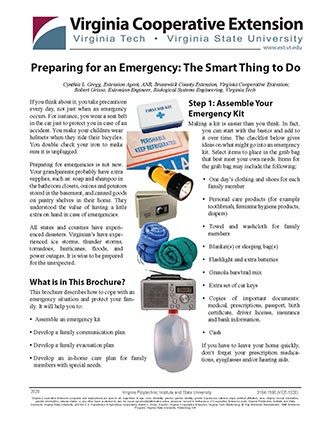
Making a kit is easier than you think. In fact, you can start with the basics and add to it over time. The checklist below gives ideas on what might go into an emergency kit. Select items to place in the grab bag that best meet your own needs. Items for the grab bag may include the following:
- One day’s clothing and shoes for each family member
- Personal care products (for example toothbrush, feminine hygiene
If you have to leave your home quickly, don’t forget your prescription medications, eyeglasses and/or hearing aids.
Your Car
If you have a car, keep its gas tank at least half-full because in an emergency you may not be able to get fuel. Other items to have in your car include:
- Bottled water
- Food (granola/energy bars)
- First aid kit
- White distress flag
- Flares/light sticks
- Blanket or sleeping bag
- Emergency reflective blanket
- Jumper cables
- Tire jack and spare tire
- Fix-a-flat
- Shovel
- Maps
Consider keeping your grab bag in your car trunk. This will allow you to leave the disaster area quickly with the things you need.
Your Home
In an emergency, having the following items in your home is highly recommended to keep your family safe.
- Water: at least one gallon/person/day
- Can opener, non-electric
- Battery powered radio
- ABC-type fire extinguisher
- Smoke detectors and carbon-monoxide detectors
- Prescription medications
- Wired telephone (not cordless)
- First aid kit
- Flashlight & battery powered lantern
- Extra batteries
- 5-7 day supply of canned or dried food
- 5-7 day supply of baby food and formula as needed
If there is a power outage, eat the food in your refrigerator first. Without power, food in a refrigerator will only be good for about four hours. If the power is out longer than that, use your emergency food supply.
Your In-Home Kit
To be MORE prepared, add supplies to last 7-10 days. How can you build your 7-10 day supply? Buy a few extra supplies each month until you have enough to last for at least 7 extra days. Buy foods that need no refrigeration and little or no cooking. TRY:
- Water: at least one gallon/person/day
- Canned or dried fruits, vegetables and soups
- Canned or dried meat and seafood
- Beverages: instant coffee, canned juice
- Rice, pasta, cereal, cracker
- Powdered or canned milk
- Baby food and formula if needed
- Comfort foods; snacks and sweets
- Other foods peanut butter, cooking oil, salt, nuts
Other Items Needed:
- Personal care products (for example: feminine hygiene products, diapers)
Pet Needs:
- Food, water, leashes, kitty litter, litter box, food/water bowls and medications, etc
- Store supplies in a dry, cool place. Use supplies before they expire and replace what you use.
Extra Supplies to Have at Home:
In order to be MOST prepared, keep these things at home.
- Outdoor grill and fuel
- Fire escape ladder
- Rope and duct tape
- Extra batteries
Never use items such as grills, camp stoves, or generators indoors. They produce carbon monoxide, that is deadly and non-detectable.
Family Communications Plan
Family Emergency Contact:
Phone:
Out-of-State Contact:
Phone:
Neighborhood Mtg Place:
Phone:
Alternate Mtg Place:
Phone:
Dial 911 in Emergency
--------------------Fold Here-----------------------
Other Important Information
Allergies:
Blood Type:
Medical Conditions:
Current Medications:
Health Care Provider:
Phone:
Other:
Cut Along outline, fold and place in wallet
Step 2: Develop a Family
Communications Plan
If you are separated and unable to get in touch with other members of your family, each member should have the same contact out-of-state. Fill out the card provided in this factsheet and give copies to all family members.
Identify:
- An emergency contact in your local area
- A contact out-of-state if the entire local area is under emergency
- A neighborhood meeting place
Step 3: Develop a Family
Evacuation Plan
In an emergency, you may have to leave your home quickly. If evacuation is necessary, listen to the radio for more information. Also make sure that everyone is familiar with:
- Best exits out of your home
- Neighborhood meeting place
- Local radio station
- Location of: grab bag, fire extinguisher, and first-aid kits
- Plan for taking of pets and livestock
Step 4: Develop a Plan for In-Home Care for members with Special Needs
Here are some helpful hints for family members with special needs:
- Inform the local fire department about the person’s special needs
- Identify a neighbor or a family member who can help if a care provider is not available
- Familiarize the care provider with the steps he/she has to take in case of an emergency
- Consider helping neighbors who may have special needs
Twice Each Year
When you change your clocks you should:
- Check the batteries in smoke and carbon monoxide detectors
- Check the pressure gauge on your fire extinguisher
- Practice getting out of your home quickly with your family
- Update your grab bag
- Use and replace any food in your kit that will soon expire
To Help Prevent the Spread of Disease and Illness
- Use a tissue when coughing sneezing or sneeze into your elbow
- Wash hands often, especially when handling food, and after coughing, sneezing or using the bathroom
Safe Drinking Water
If your water source is from a city or town system, follow orders from municipal officials strictly. Heat water to a rolling boil for 2 minutes. Do not use water from a well that has been submersed in flood water. Check with officials about testing for well water contamination. Never use flood water for any purpose because it could be contaminated.
Disaster Declarations
Local government has direct responsibility for the safety of its residents. State government has additional legal responsibilities for emergency response and recovery, and serves as a point of contact between local and federal governments. The day-to-day activities of the emergency preparedness program have been delegated to the County/City Administrator and Emergency Services Coordinator. They will direct and control emergency operations in time of emergency and issue directives to other services and organizations concerning disaster preparedness.
Acknowledgments
This brochure was designed and produced by the Brunswick County Local Emergency Planning Committee. For additional information on Emergency Preparedness, visit the following websites:
www.ready.gov
www.fema.gov
www.cdc.gov
www.redcross.org
www.eden.lsu.edu
www.ext.vt.edu
www.vaemergency.gov
www.brunswickco.com/government/departments/emergency_services
www.brunswickso.org
Special Thanks to:
Brunswick County Local Emergency Planning Committee Brochure Team
New Hampshire Department of Safety, Homeland Security & Emergency Management
Greensville County, A Citizens Guide to Disasters
VA Department of Emergency Management
Virginia Cooperative Extension materials are available for public use, reprint, or citation without further permission, provided the use includes credit to the author and to Virginia Cooperative Extension, Virginia Tech, and Virginia State University.
Virginia Cooperative Extension is a partnership of Virginia Tech, Virginia State University, the U.S. Department of Agriculture, and local governments. Its programs and employment are open to all, regardless of age, color, disability, sex (including pregnancy), gender, gender identity, gender expression, genetic information, ethnicity or national origin, political affiliation, race, religion, sexual orientation, or military status, or any other basis protected by law.
Publication Date
May 11, 2020