Wash Hands: Fight Disease-Causing Germs
ID
348-965 (FST-497P)
 EXPERT REVIEWED
Why Wash Hands?
Failure to adequately wash hands is a major cause of infectious diseases. Individuals who practice poor personal hygiene while preparing food may spread diseases such as hepatitis A, salmonellosis, and shigellosis. Studies indicate that one-third (33%) of people do not wash their hands after using the restroom.
When To Wash Hands?
Wash hands often because disease-causing germs can easily be transferred to food, surfaces, and people.
Germs cannot be seen with the naked eye. Warmth and moisture (perspiration) on skin surfaces allow germs to quickly grow into millions.
Hands should be washed:
- Before, during, and after preparing food.
- Before eating food.
- After using the restroom.
- After coughing, sneezing, or blowing your nose.
- After changing diapers.
- After handling money.
- After handling trash or taking out garbage.
- After handling (petting) pets or other animals.
- After work or play.
- Whenever hands come in contact with body fluids (i.e. runny nose, watery eyes, saliva).
- More frequently when someone in the home is sick.
- When hands are dirty.
How To Wash Hands?
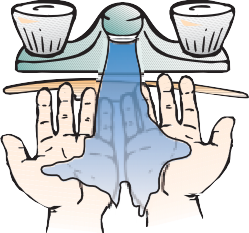
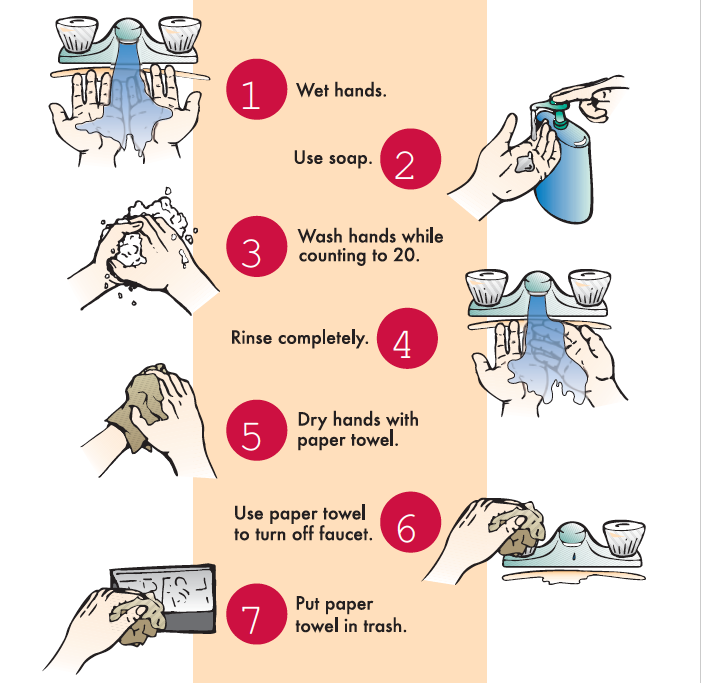
Hands should be washed vigorously by scrubbing with warm, soapy water for at least 20 seconds. Germs can hide underneath fingernails. Thus, rub tips of fingers along the soapy palm of the alternate hand or use a fingernail brush. Rinse hands well and completely dry with a paper towel or airdryer. Turn the faucet handle off with a paper towel to avoid recontamination. If you will be preparing food, try not to touch potentially contaminated surfaces after washing your hands. Proper handwashing steps are listed on the other side of the page.
THE PROPER WAY TO WASH YOUR HANDS
Virginia Cooperative Extension materials are available for public use, reprint, or citation without further permission, provided the use includes credit to the author and to Virginia Cooperative Extension, Virginia Tech, and Virginia State University.
Virginia Cooperative Extension is a partnership of Virginia Tech, Virginia State University, the U.S. Department of Agriculture (USDA), and local governments, and is an equal opportunity employer. For the full non-discrimination statement, please visit ext.vt.edu/accessibility.
Publication Date
October 25, 2024