Large and Unusual Insects Found in Virginia
ID
ENTO-148NP (ENTO-683NP)
Introduction
Several insects found in Virginia often cause concern due to their large size or coloration. For the most part, these insects are harmless curiosities of nature.
Dobsonflies
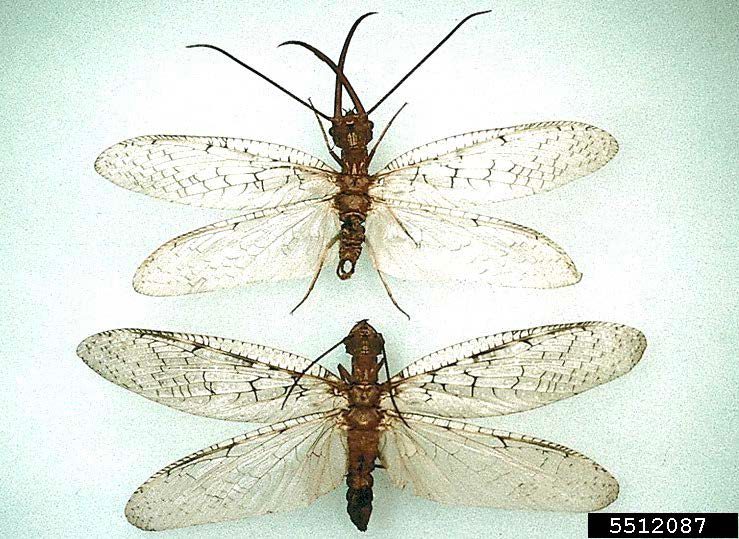
Dobsonflies, Corydalus cornutus (Megaloptera: Corydalidae), are found near rivers and streams. The adults are attracted to lights at night. The immature stage of this insect, called the hellgrammite, is aquatic and highly favored as fish bait. Hellgrammites are typically found in clean, fast-flowing water and indicate healthy aquatic ecosystems. The wingspan measures 4-10 cm (1.5-4 inches), and the males have large but harmless mandibles that extend forward from the head to attract females (Fig. 1). The females have shorter, stouter mandibles that can give a painful bite if handled carelessly.
Eastern Hercules Beetle
Adult eastern Hercules beetles, Dynastes tityus (Coleoptera: Scarabaeidae), are sometimes found near lights at night and can measure over 4 cm (2 inches) long. The males have long projections on the head and thorax that they use to knock other males off trees but are otherwise harmless. The adult female is similar in size and color, but is hornless. The immature stage is a large white grub found inside oak and locust trees with heart rot. Adult beetles range from light green to nearly black-brown and are the largest beetle by weight in the state of Virginia.

Luna Moth
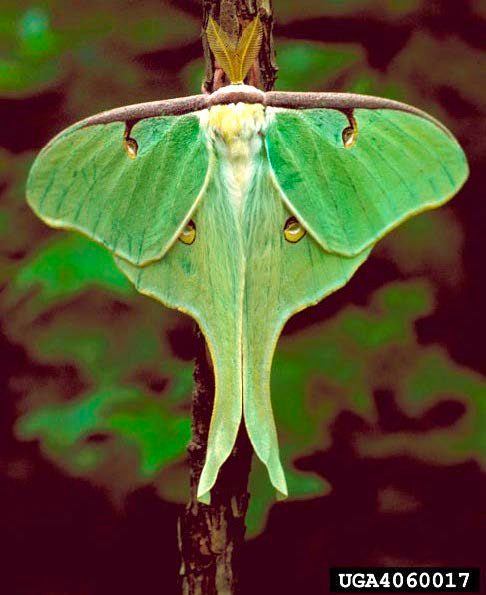
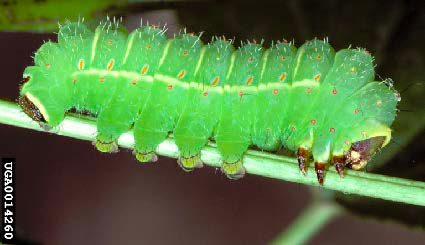
Luna moths, Actias luna, are large green moths that are found near houses, often on a screen or wall near an outside light. The moth can have a wingspan of up to 10 cm (4 inches) with noticeably long tails on the hindwings (Fig. 3). The larva, which is a large caterpillar, feeds on the leaves of a variety of hardwood trees (Fig. 4).
Cecropia Moth
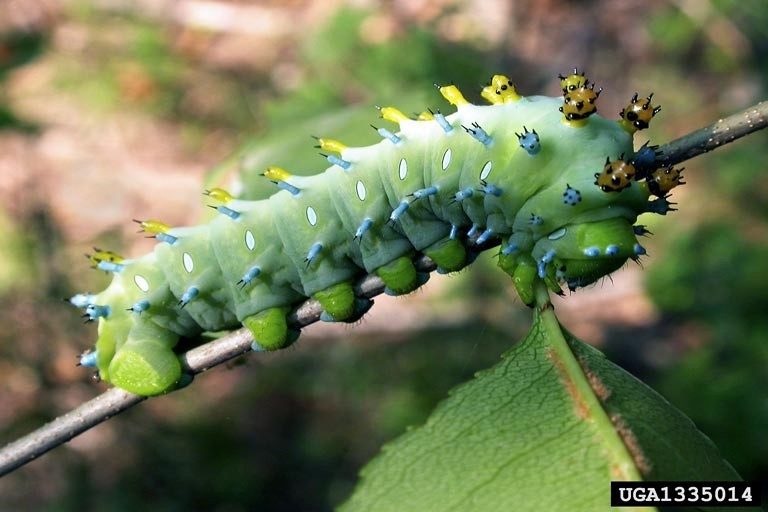
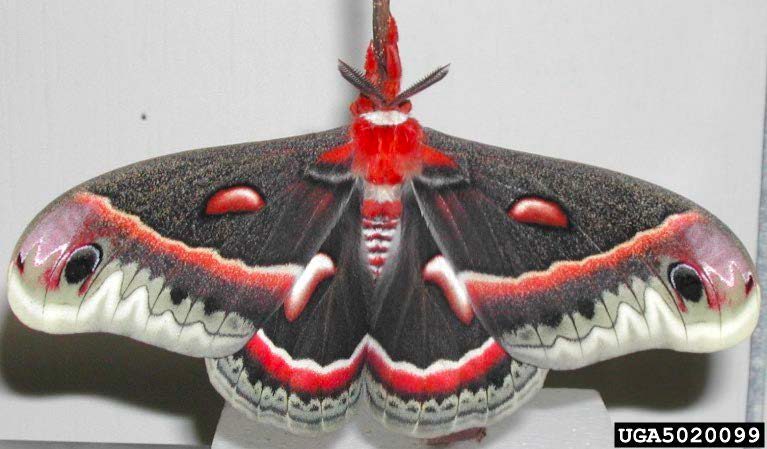
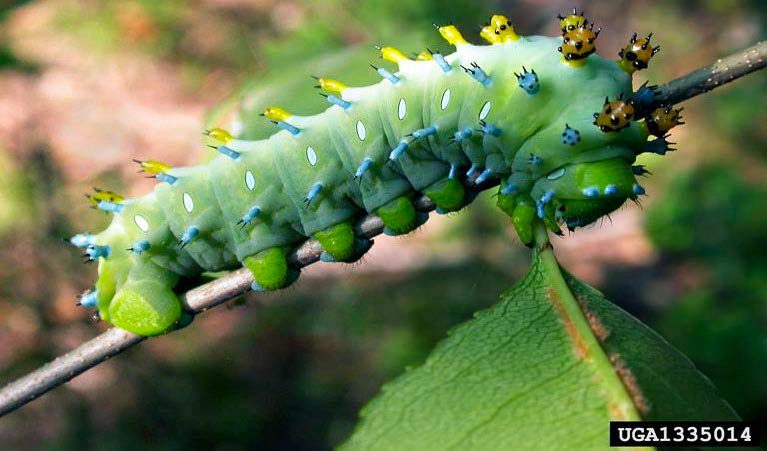
Cecropia moths, Hyalophora cecropia (Lepidoptera: Saturniidae), are another large moth with a wingspan of up to 10 cm (4 inches) (Fig. 5). They are also attracted to porch lights and are often found on screens and walls the next morning. The caterpillars feed on the leaves of various hardwood trees (Fig. 6).
Eastern Eyed Click Beetle
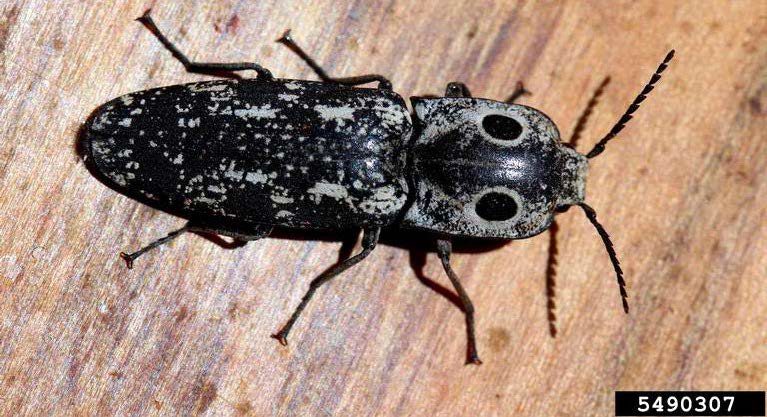
Adult eastern eyed click beetles, Alaus oculatus (Coleoptera: Elateridae), have a pattern on their thorax that resembles eyespots and is thought to deter bird attacks (Fig. 7). Despite some folklore accounts, these eyespots do not glow in the dark. Adults measure about 2.5-5 cm (1-2 inches) long and have a hinge between their body segments. The beetle can lock and release this hinge when startled, creating a clicking sound and propelling the insect into the air. The grub stage lives in rotting trees and is harmless.
Dragonflies
Dragonflies (Odonata: Anisoptera) can have a wingspan of 7-10 cm (3-4 inches) and are found mostly near water, but also in fields and woods (Fig. 8). Adults feed on insects they capture in flight. Males fight for the best sites near water, where the females will lay their eggs. The immature stages are aquatic with extendable mandibles for ambushing prey. Some dragonflies have migrations similar to birds and monarch butterflies. Dragonflies are also known in folklore as “snake doctors” due to the belief that they would help injured snakes.

Giant Water Bug
Giant water bugs, Lethocerus spp. (Hemiptera: Belostomatidae) are large aquatic insects (fig. 9) found in a variety of habitats including swamps, ponds, and ditches. Adults are 5-6 cm (2-2.4 inches) in length with piercing-sucking mouthparts that allow them to feed on prey larger than themselves, including turtles, fish, and frogs. Their bites are painful, but they are not aggressive unless handled. Giant water bugs are attracted to bright lights and can be found under neon signs and in sports stadiums in summer and early fall.

For more information on other unusual insects, see also the Virginia Cooperative Extension fact sheets on Velvet Ants, Giant Resin Bee, and the Wheel Bug.
Revised
Patricia L.S. Wooden, August 31, 2026.
Virginia Cooperative Extension materials are available for public use, reprint, or citation without further permission, provided the use includes credit to the author and to Virginia Cooperative Extension, Virginia Tech, and Virginia State University.
Virginia Cooperative Extension is a partnership of Virginia Tech, Virginia State University, the U.S. Department of Agriculture (USDA), and local governments, and is an equal opportunity employer. For the full non-discrimination statement, please visit ext.vt.edu/accessibility.
Publication Date
September 22, 2026